



Before you can be approved for life insurance coverage, you must first be assessed on your level of risk by the insurer.
This can be a frustrating hurdle for many looking to life insurance to protect their family and future, as everything from age to lifestyle choices could result in a denied application or higher premiums. More commonly, however, insurance providers will look at applicant’s physical health and medical history to determine the level of risk in insuring them. While this can seem like an unfair way to assess one as an insurance risk, it is unfortunately one all applicants will encounter.
At Berry Insurance, our life insurance specialist John Galvin has helped numerous clients obtain life insurance coverage, but has also seen how health history can make it more difficult to be approved coverage. In this article we’ll go over what insurers will be looking at when assessing applicants and why you may be denied based on your physical health or your family's medical history.
Table of contents:
-
Why is my physical health & medical history important for life insurance?
- Does my family's health history affect my chances of receiving life insurance?
- Can I be approved for life insurance if I’ve had cancer?
- Can I file an appeal after being denied life insurance?
Why is my physical health & medical history important for life insurance?
When evaluating an application, life insurance providers will be reviewing multiple factors of your life. This includes your physical health and any history of past medical conditions.
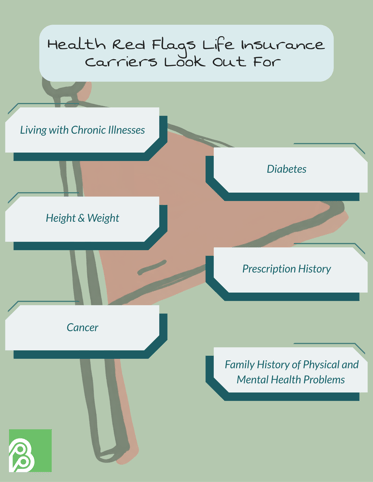
If you’re living with chronic illnesses, diabetes, or other diseases at the time of your application, your insurer may be inclined to deny you coverage - as your current health could pose too much of a risk to them to provide you with a policy. Even prescription history could be enough to make an insurer deny coverage.
Additionally, your height and weight will be a big rating factor. Life insurance carriers have build charts which help to determine the “health class” someone will fall into, and if extra premiums will be charged based on weight. It is not unheard of to be denied life insurance due to one’s build, although it is typically in conjunction with other health issues.
Insurers typically lack nuance when analyzing your health medical history, being solely on the lookout for common red flags. While this is not necessarily fair or properly accounts for everyone’s unique health history, it is unfortunately how insurance companies operate.
Some insurers may approve coverage if consistent treatment methods are proven, but any existing health conditions may increase the price of the policy.
Does my family's health history affect my chances of receiving life insurance?
Unfortunately, yes.
Insurance providers are known to factor in any notable history of chronic disease, cancer, diabetes, or even suicide in your family, in addition to your own. Typically insurers will focus on parents and/or siblings when conducting their assessment.
Having certain health conditions in your family could make it more difficult for you to be approved for life insurance coverage.
Can I be approved for life insurance if I’ve had cancer?
If you are in active cancer treatment, it will unfortunately be impossible to get approved for coverage, as all carriers will ask about your cancer status when applying.
Applicants who have recently become cancer free (congrats!) should know that most insurers require you to complete at least 5 years of remission before you can qualify for life insurance coverage.
Can I file an appeal after being denied life insurance?
If your life insurance application is rejected, ask for details to see if the denial was based on incorrect or insufficient evidence. If you believe your application was wrongly rejected due to an error on your provided medical history or because certain information was missing, you have the right to appeal the decision.
When filing an appeal with the insurer, you will need to submit credible up-to-date medical and personal information. Work with your doctor to include an accurate assessment of your current health to improve your chances of being approved coverage.
Bouncing back
While at times an unfair hurdle many applicants will face, being denied life insurance does not make it impossible for you to receive it down the line. If you cannot appeal the decision, look into addressing what areas of your health that may have been flagged in your application so that you can have an easier time reapplying at a later date.
There are some instances where choosing the right carrier is very important as well. Some may decline coverage to an applicant that another carrier will readily offer coverage to. If you feel a carrier has unfairly rated you, try your luck with another carrier and see if they assess you more kindly.
Planning on applying for life insurance? Then you should know there are good and bad times to apply. Read our recommendations on when you should (and should not) be applying for life insurance coverage in this guide: When are the Best (and Worst) Times to get Life Insurance?